University of Reading Cookie Policy

We use cookies on reading.ac.uk to improve your experience. Find out more about our cookie policy. By continuing to use our site you accept these terms, and are happy for us to use cookies to improve your browsing experience.

Continue using the University of Reading website

  • Schools and departments
  • Henley Business School
  • University of Reading Malaysia
  • Applicants
  • Student
  • Staff
  • Alumni
  • Local Community
Show/Hide navigation
University of Reading University of Reading
Mobile search categories
  • Study and life
  • Research
  • About us
  • Contact us
  • View courses
  • Home
  • Study and life
    • Study
    • Student life
    • Accommodation
    • Open Days and visiting
    • International students
  • Research
    • Research themes
    • Impact
    • Innovation and partnerships
    • Research environment
    • Get involved
  • About us
    • Business
    • Our global community
    • Local community
    • Visit us
    • Strategy
    • Governance
  • Contact us
  • Applicants
  • Student
  • Staff
  • Alumni
  • Local Community
  • Schools and departments
  • Henley Business School
  • University of Reading Malaysia
  • View courses

Faces of Reading

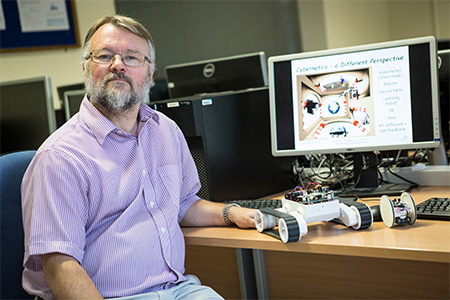
Pil and Galia Kollectiv

Pil and Galia Kollectiv, Lecturers

We began working together as artists, writers and curators when we met in high school in Jerusalem, before being drawn to the UK for its vibrant art, music and culture.

Today, we are joint lecturers in Fine Art and co-directors of postgraduate research in Art at the University of Reading, and have worked in the Department for over seven years across a range of roles.

Collaboration was never something we planned, it was more of a way of doing things that seemed practical to us. But, when it came to finding institutional support for our work, particularly in academia, we found that it was quite difficult to square this way of working with existing frameworks. 

Few universities were willing to take us on as joint lecturers, so we were delighted to find the University of Reading more open-minded. Here, our collaborative approach is not only supported, but reflected in the teaching in the Department.

The Art Department offers many opportunities for students to work collaboratively and really fosters an engagement with practices that challenge the idea of individual authorship.

As well as working students in the studio, we have had several opportunities to run projects offsite as mini-residencies with students in collaboration with various venues both nationally and abroad, from the Merzbarn in Cumbria to Nova Perla on the outskirts of Prague. In these less formal environments, we have found group work to be particularly useful as a way of instilling the mutual support that we hope will serve our students as well when they graduate as our collaboration has done for us.

Read more
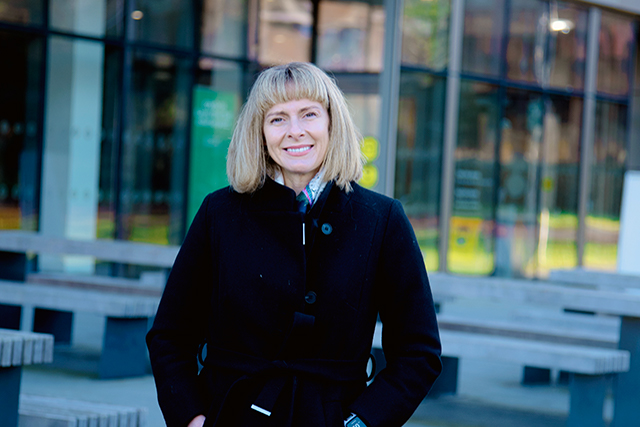
Vicky Collins

Vicky Collins, Associate Professor

I am an Associate Professor for English for Academic Purposes (EAP) at the International Study and Language Institute (ISLI). My role primarily is to teach and support international students at the University whose first language is not English both before and during their degrees.

I am passionate about language and education and have never regretted this choice of career which led me to working in six different countries before finally returning to my own. I’ve taught on a range of exciting projects across state and commercial sectors, such as the British Council developed Peacekeeping English Project. These experiences and skills have helped me to connect with the diverse international student body at Reading. Students who would otherwise feel less confident in seminars, light up when you share first-hand insights of their culture or country. What’s more my colleagues in ISLI reflect the diversity of our School with a fusion of backgrounds, interests, ambitions, languages, and qualifications. 

I entered higher education on a series of fixed term contracts which is common to our sector as there is a disproportionate demand for EAP teachers/lecturers in the summer, but this reduces once Autumn is upon us. Living in this state of employment precarity was unnerving, especially when I was expecting my first child. In 2009, I did manage to secure my first permanent post despite being five months pregnant at the time of the interview. Even though it is unlawful to consider this ‘temporary condition’ during the selection and recruitment process, just 11 years ago attitudes differed. I felt incredibly anxious before the interview panel. Currently, as a member of the Unviersity Parent and Family steering group, I am keen to open up discussions on issues facing parents -to- be, parents, and carers working at universities, and share best practice in support across the University. 

I came to work at UoR, after working for nine years at Royal Holloway, University of London. Moving jobs mid-career is a huge leap of faith for anyone, but with a young family to relocate, this was a significant undertaking for me. In addition, my carefully built network of personal and professional contacts had also been removed. At first the benefits of changing employer and location can seem quite small in comparison to the sacrifices. I would say to anybody in this position though that the gains do start to emerge incrementally. 

Reflecting on the long working lives ahead of us, we should reconsider outstaying employers. Four years on my family are settled and working at Reading has brought me so many new opportunities in teaching a greater diversity of nationalities, supporting outreach work in English Language teaching, and leading on new provision. Most of all I have experienced a more positive approach to different contracts types. I now work 0.9FT and have a better work/family balance as a result, something that was not conceivable in my past roles.

Read more
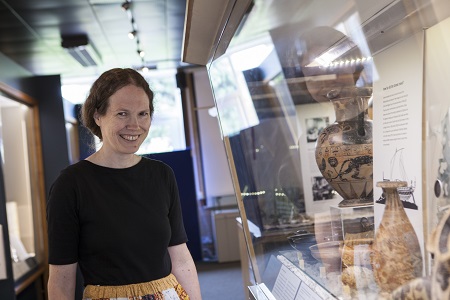
Alice Williams in the grounds of the University

Alice Williams, Executive Administration Officer

I had some fantastic programme administrators when I was studying at the University; I graduated in Archaeology and History in 2013. It's nice to be able to give back to the students now.

I currently work in executive support as part of University Corporate Services team.

My previous job was in retail so it was quite unsociable and involved long hours. My department gives you flexibility, you have to be in for core hours but you can come in early and then you're off again, it's fantastic.

Following the Professional and Administrative Services (PAS) review, I got the job here as Programme Administrator in August 2016. I work with a good group of people - we all bounce off each other, dig in and help each other out.

There is definitely a focus on staff development - I've recently finished the Springboard Women's Development Programme. My manager gave me the time to go on that course because it was important to me and being part of that cohort was really fulfilling.

I'm also an LGBTQIA+ Ally. I've always considered myself a diversity and LGBTQIA+ ally, mainly because I have a brother who is transgender, so it is something close to my heart. As soon as I heard about the Ally programme, I was very keen to be part of it.

Read more
Ugo Marsili standing in a University corridor

Ugo Marsili, Lecturer

In 2012 I joined the University and started teaching evening classes in Italian. In 2013 I was offered the chance to teach an Italian and Spanish course on the undergraduate programme of the Institution-Wide Language Programme (IWLP). This is a programme at Reading that enables students to learn a language as part of their degree or for personal development; it's also open to staff at the University.

I started with a few hours and now, after five years, I work as a teacher and module convenor for Spanish and British Sign Language (BSL). I've always been a teacher and like to pass on my knowledge and passion for languages to my students. I believe that "teaching skills make you skilful".

I speak several languages, so I know exactly what the main problems are with learning a new language and what students find most difficult. I try to encourage them to speak the language and overcome any difficulties on the way.

Everyone here has given me the opportunity to show my potential and challenge myself as a language teacher, but most of all to do what I love.

I'm an audiovisual translator and I study BSL. I believe that deaf and visually impaired people should have access to language learning too. My aim is to work as an interpreter in the future, and I am proud that BSL will be taught here at the University.

I'm a School Champion for Diversity and a member of the LGBTQIA+ staff scheme. I think it's important to promote diversity and inclusion.

At the University of Reading, our students come from all around the world and this makes their learning experience really interesting. I really like to build a relationship with my students, watching them grow as independent learners, helping them with their learning process, and making them feel part of a community.

I give a lot and receive a lot; it's beautiful. This is why I'm still teaching after 12 years.

Read more about the University's LGBT Plus Staff Network.

Read more
Loading additional items please wait....
There is no more content to show at this time
mask
Choose a subject
2026/27
2027/28
Undergraduates
Postgraduates
Undergraduates
Postgraduates

Subjects A-B

  • Accounting
  • Acting and Drama
  • Agriculture
  • Ancient History
  • Anthropology
  • Archaeology
  • Architectural Engineering
  • Architecture
  • Art
  • Biochemistry
  • Biological Sciences
  • Biomedical Engineering
  • Biomedical Sciences
  • Bioveterinary Sciences
  • Building and Surveying
  • Business and Management

Subjects C-E

  • Chemistry
  • Classics and Classical Studies
  • Climate Science
  • Computer Science
  • Construction Management
  • Consumer Behaviour and Marketing
  • Creative Writing
  • Criminology
  • Digital Media and Communication
  • Ecology
  • Economics
  • Education
  • Engineering
  • English Language and Applied Linguistics
  • English Literature
  • Environment

Subjects F-G

  • Film & Television
  • Finance
  • Food
  • Foundation programmes
  • French
  • Geography
  • German
  • Global Sustainable Development
  • Graphic Communication and Design

Subjects H-M

  • Healthcare
  • History
  • International Foundation Pathways
  • International Relations
  • Italian
  • Languages and Cultures
  • Law
  • Linguistics
  • Marketing
  • Mathematics
  • Medical Sciences
  • Meteorology and Climate
  • Microbiology
  • Museum Studies

Subjects N-T

  • Nutrition
  • Pharmacology
  • Pharmacy
  • Philosophy
  • Physician Associate Studies
  • Politics and International Relations
  • Psychology
  • Real Estate and Planning
  • Sociology
  • Spanish
  • Speech and Language Therapy
  • Surveying and Construction Management
  • Teaching
  • Theatre & Performance

Subjects U-Z

  • Wildlife Conservation
  • Zoology

Subjects A-C

  • Accounting
  • Agriculture
  • Ancient History
  • Archaeology
  • Architecture
  • Art
  • Artificial Intelligence
  • Biological Sciences
  • Biomedical Sciences
  • Business (Post-Experience)
  • Business and Management (Pre-Experience)
  • Classics
  • Climate Science
  • Computer Science
  • Construction Management and Engineering
  • Consumer Behaviour
  • Creative Enterprise

Subjects D-G

  • Data Science
  • Dietetics
  • Digital Business
  • Ecology
  • Economics
  • Education
  • Energy and Environmental Engineering
  • Engineering
  • English Language and Applied Linguistics
  • English Literature
  • Environmental Sciences
  • Film, Theatre and Television
  • Finance
  • Food and Nutritional Sciences
  • Geography and Environmental Science
  • Graphic Design

Subjects H-P

  • Healthcare
  • History
  • Information Technology
  • International Development and Applied Economics
  • Law
  • Linguistics
  • Management
  • Marketing
  • Meteorology and Climate
  • Microbiology
  • Nutrition
  • Pharmacy
  • Philosophy
  • Physician Associate
  • Politics and International Relations
  • Project Management
  • Psychology
  • Public Policy

Subjects Q-Z

  • Real Estate and Planning
  • Social Policy
  • Speech and Language Therapy
  • Strategic Studies
  • Teacher training
  • Theatre
  • Typography and Graphic Communication
  • War and Peace Studies
  • Zoology

Subjects A-B

  • Accounting
  • Acting and Drama
  • Agriculture
  • Ancient History
  • Anthropology
  • Archaeology
  • Architectural Engineering
  • Architecture
  • Art
  • Biochemistry
  • Biological Sciences
  • Biomedical Engineering
  • Biomedical Sciences
  • Bioveterinary Sciences
  • Building and Surveying
  • Business and Management

Subjects C-E

  • Chemistry
  • Classics and Classical Studies
  • Climate Science
  • Computer Science
  • Construction Management
  • Consumer Behaviour and Marketing
  • Creative Writing
  • Criminology
  • Digital Media and Communication
  • Ecology
  • Economics
  • Education
  • Engineering
  • English Language and Applied Linguistics
  • English Literature
  • Environment

Subjects F-G

  • Film & Television
  • Finance
  • Food
  • Foundation programmes
  • French
  • Geography
  • German
  • Global Sustainable Development
  • Graphic Communication and Design

Subjects H-M

  • Healthcare
  • History
  • International Foundation Pathways
  • International Relations
  • Italian
  • Languages and Cultures
  • Law
  • Linguistics
  • Marketing
  • Mathematics
  • Medical Sciences
  • Meteorology and Climate
  • Microbiology
  • Museum Studies

Subjects N-T

  • Nutrition
  • Pharmacology
  • Pharmacy
  • Philosophy
  • Physician Associate Studies
  • Politics and International Relations
  • Psychology
  • Real Estate and Planning
  • Sociology
  • Spanish
  • Speech and Language Therapy
  • Surveying and Construction Management
  • Teaching
  • Theatre & Performance

Subjects U-Z

  • Wildlife Conservation
  • Zoology

We are in the process of finalising our postgraduate taught courses for 2027/28 entry. In the meantime, you can view our 2026/27 courses.

Ready for more?

See job vacancies
Press
Procurement
View courses
  • Charitable Status
  • Accessibility
  • Privacy Policy
  • Cookie preferences
  • Terms of use
  • Sitemap

© University of Reading