

National blue plaque to honour Professor Edith Morley
18 November 2026
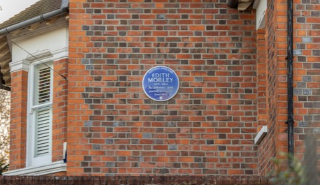
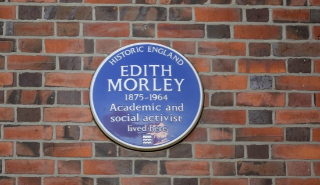 A national blue plaque for Edith Morley has been installed at her long-time home at Kendrick Road, Reading.
Morley was a pioneering academic, social activist and a Professor at the University of Reading – a position that made her one of the first woman to hold a professorial position at an British university.
The installation, unveiled Monday, 16 November, marks another significant milestone in the University of Reading’s centenary year. Professor Edith Morley played a central role in the development of University College Reading, later the University of Reading. In 1908, she secured the title of Professor of English Language and became a prominent advocate for fair treatment of women in public and professional life.
Her legacy is celebrated with a campus building and an annual lecture named in her honour. The University of Reading's Special Collections contains a collection dedicated to Professor Edith Morley, and includes correspondence, newspaper cuttings and excerpts, essays by Morley, lecture note books containing notes taken by Morley as a student and as a lecturer, photographs, theses and sundry papers.
Dr Jacqui Turner, Associate Professor of History at the University of Reading, who submitted the application for the plaque, said: “Edith Morley was a remarkable pioneer whose determination and achievements helped open doors for women in higher education, politics and public life. Her successes were hard-won, and her legacy continues to inspire.
“Her contribution is already commemorated in the name of the Edith Morley Building at the University of Reading, where I have the privilege of working every day and an annual lecture in her name.
“This blue plaque is a fitting tribute to an extraordinary woman whose campaigning and commitment touched lives both nationally and locally. From her involvement in the women’s suffrage movement to her work supporting refugees in Reading during the Second World War, for which she was awarded an OBE, Edith Morley dedicated much of her life to challenging inequalities and improving the lives of others. It is wonderful to see her recognised in this way.” 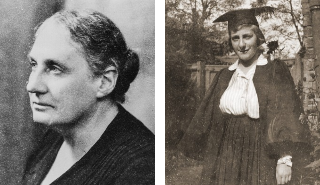
The plaque inscription reads:
EDITH MORLEY
1875-1964
Academic and social activist
Lived here
Early life and academic career
Born in Bayswater, London, in 1875, Edith Morley grew up at a time when opportunities for women in higher education and professional life were severely restricted. Determined to pursue an education despite these barriers, she forged a groundbreaking academic career and went on to become one of Britain's pioneering female professors, as well as a prominent advocate for equality, educational opportunity, and social justice.
Beginning her career as a lecturer, Morley joined Reading College in 1901 and soon became responsible for much of the institution's English teaching. After campaigning against unequal treatment, she secured academic recognition and built a distinguished career as a scholar and university administrator.
Campaigning and public service
Beyond academia, Morley was deeply committed to social justice. She campaigned for women's suffrage, joined the Fabian Society, supported adult education through the Workers' Educational Association, promoted educational opportunities for working people, worked on prison reform and served as a Justice of the Peace. During the 1930s and 1940s she helped establish and run the Reading Refugee Committee, assisting Jewish people fleeing Nazi oppression. In 1950 she was awarded an OBE for her work on behalf of refugees.
 Morley continued writing and campaigning after retirement and remained active in public life despite ill health. Since her death in 1964, recognition of her achievements has grown significantly. The University of Reading named a major academic building in her honour and hosts an annual Edith Morley Lecture.
The new national blue plaque commemorates Edith Morley's pioneering role in expanding opportunities for women in higher education and public life. Installed at her former home, the plaque connects her remarkable story to the place where much of this work took shape.
Claudia Kenyatta and Emma Squire, co-CEOs of Historic England, said: “Edith Morley challenged barriers in academia at a time when opportunities for women were severely limited. Her determination helped reshape expectations about women's place in higher education and public life.
“Her achievements extended far beyond the university sector. Through her work for suffrage, adult education and refugee support, she demonstrated a lifelong commitment to social progress.”
Read more: Professor Edith Morley
Loading additional items please wait....
mask